

You’re drowning in data, but somehow still making decisions in the dark.
Your Google Analytics shows one story. Your CRM tells another. Your Facebook Ads dashboard? That’s a completely different narrative. Meanwhile, your email marketing platform is tracking conversions that don’t match anything else you’re seeing.
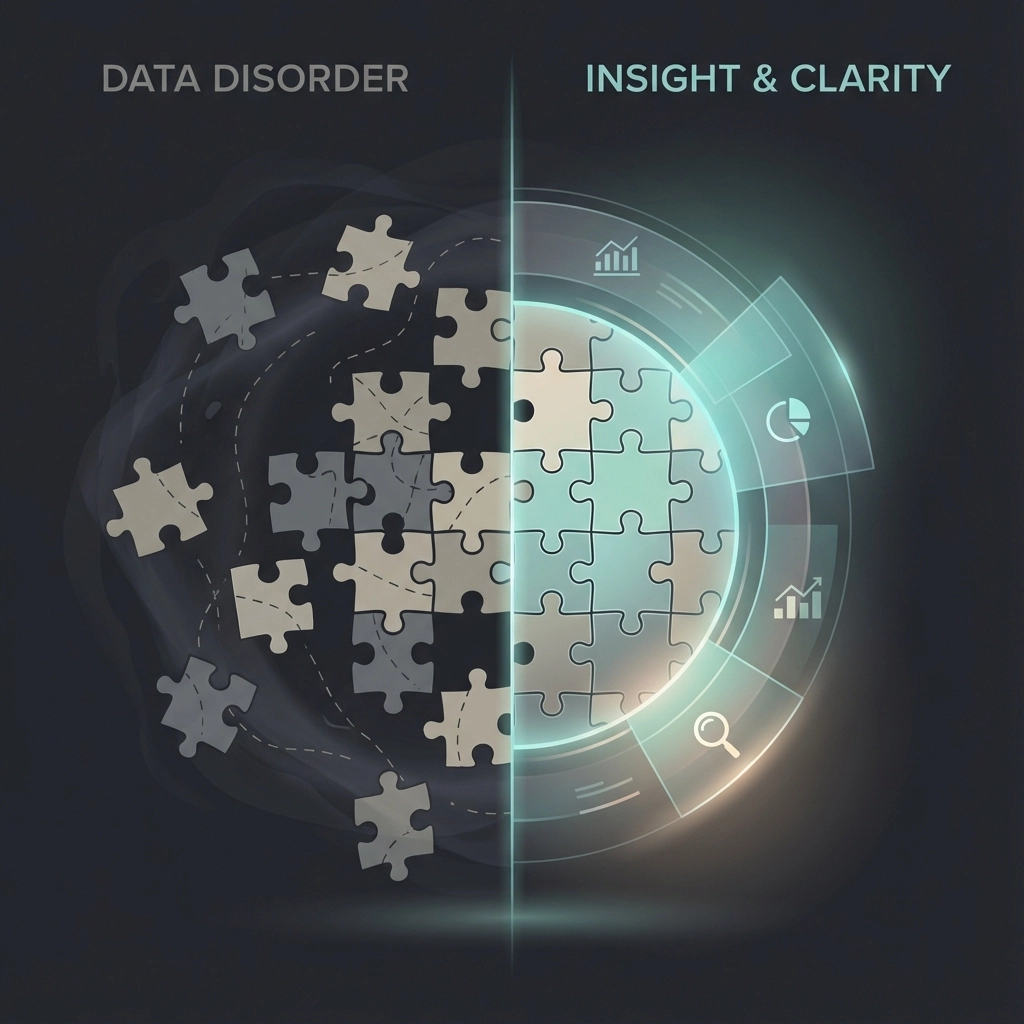
Sound familiar? You’re not alone. Most businesses are sitting on treasure troves of data that might as well be digital confetti, scattered, disconnected, and ultimately useless for making smart decisions.
Bad data isn’t just frustrating; it’s expensive. When your digital assets aren’t talking to each other, every marketing dollar becomes a gamble instead of an investment.
The Real Cost of Disconnected Data
Here’s what happens when your digital ecosystem resembles a dysfunctional family reunion: everyone’s in the same room, but nobody’s talking.
Your website analytics show 500 conversions this month. Your CRM recorded 380 new leads. Your ad platforms are claiming credit for 650 conversions between them. The math doesn’t add up because the systems aren’t connected.
You’re making decisions based on incomplete pictures. That “successful” Facebook campaign? It might actually be cannibalizing your organic traffic. Those email subscribers who seem disengaged? They could be your highest-value customers making purchases through different channels.
Siloed data creates blind spots that cost real money. You’ll over-invest in underperforming channels and under-invest in your actual winners. That’s not strategy, that’s expensive guesswork.

The solution isn’t collecting less data. It’s connecting the data you already have into a cohesive reporting stack that tells one unified story about your business performance.
Why Your Ad Platforms Need Friends
Google Ads and Meta campaigns are particularly vulnerable to tracking chaos. These platforms are hungry for conversion data, but they’re only as smart as the signals you feed them.
When you run ads without proper tracking connections, you’re essentially flying blind at 30,000 feet. Sure, you can see clicks and impressions, but you can’t see what actually matters: which ads drive real business results.
Proper conversion tracking requires a connected ecosystem. Your ad platforms need to know when someone becomes a lead, makes a purchase, or completes any action that matters to your business. This means connecting:
- Your website analytics to your ad accounts
- Your CRM to your marketing platforms
- Your email marketing tools to your customer database
- Your ecommerce platform to your advertising dashboards
Without these connections, your ad algorithms are optimizing for clicks instead of customers. You’ll attract browsers instead of buyers, and wonder why your cost per acquisition keeps climbing.
When More Tools Actually Help
Sometimes the answer to better data isn’t simplifying your tech stack: it’s adding the right pieces to make everything work together.
A Customer Data Platform (CDP) can be the missing link between your various systems. Instead of forcing each tool to talk directly to every other tool, a CDP acts as a central hub that collects, cleans, and distributes data where it needs to go.
Google Tag Manager becomes essential when you’re running multiple ad campaigns across platforms. It ensures consistent tracking without slowing down your site or creating duplicate data streams.
Third-party attribution tools might seem like overkill, but they become necessary when you’re spending significant money on paid advertising. They help you understand the full customer journey instead of giving credit to whichever platform grabbed the last click.
The key is implementing tools strategically, not collecting them like digital Pokemon cards. Each new platform should solve a specific problem in your data flow, not create new ones.
Building Your Connected Tech Stack
Creating a cohesive reporting system starts with mapping your current data flow. Where does information enter your business? How does it move between systems? What gets lost in translation?
Start with your conversion funnel. Every step from awareness to purchase should be tracked consistently across all platforms. This means:
Your website needs proper analytics implementation that connects to your advertising accounts. If you’re struggling with website performance issues, fixing those technical problems becomes even more critical when you’re trying to track user behaviour accurately.
Your lead capture forms should feed into your CRM automatically, with proper source attribution. No more manual data entry or wondering which campaign generated which lead.
Your email marketing platform should sync with your customer database, so you can track the full lifecycle from email subscriber to paying customer.
Integration isn’t just about convenience: it’s about intelligence. When your systems share data seamlessly, you can spot patterns and opportunities that individual platforms would never reveal.
The Signal Quality Problem
Not all data connections are created equal. Poor signal quality is almost worse than no signals at all because it gives you false confidence in bad decisions.
Clean, consistent data requires standardised naming conventions across all platforms. If you call something a “lead” in your CRM and a “conversion” in Google Ads, your reporting will be confused from day one.
Your tracking pixels need to fire consistently and at the right moments. A conversion pixel that fires on page load instead of form submission will inflate your numbers and confuse your ad algorithms.
Cross-domain tracking becomes critical if you send users between different websites during the conversion process. Without proper setup, you’ll lose attribution data and undervalue your marketing efforts.

For businesses managing multiple campaigns across Google and Meta, proper signal setup isn’t optional: it’s the difference between profitable advertising and expensive brand awareness exercises.
Making Decisions with Confidence
Connected data transforms how you make business decisions. Instead of quarterly guesswork sessions, you get real-time insights into what’s actually working.
Attribution modelling becomes possible when all your touchpoints feed into a central system. You can finally answer questions like “Should we increase our Google Ads budget or invest more in email marketing?” based on actual performance data, not gut feelings.
Budget allocation becomes strategic instead of habitual. You’ll shift money toward channels and campaigns that drive real business results, not just vanity metrics.
Campaign optimization happens faster because you can spot trends and issues before they become expensive problems. When your data is connected, a drop in conversion quality becomes visible immediately across all platforms.
Getting Started Without Overwhelm
Building a connected reporting stack doesn’t happen overnight, and it doesn’t require a complete system overhaul.
Start with your biggest pain point. If you’re struggling to track Google Ads performance accurately, focus on connecting your website analytics to your ad accounts first. If lead attribution is your biggest challenge, prioritize CRM integration.
Map your customer journey and identify the most critical touchpoints. These are your priority connections: the data flows that will have the biggest impact on your decision-making ability.
Consider working with specialists who understand both the technical setup and the strategic implications. Connected tech stacks require expertise to implement properly, but the investment pays dividends in better decision-making and improved campaign performance.
Your data should work as hard as you do. When everything’s connected properly, you’ll wonder how you ever made marketing decisions in the dark.
The businesses winning in today’s digital landscape aren’t necessarily the ones with the most data: they’re the ones with the most connected data. Every signal, every touchpoint, and every conversion working together to paint a complete picture of business performance.
That’s where smart growth happens. Not in the individual platforms, but in the intelligent connections between them.











