
Studio
Threeyears,eightindustries,oneapproach. Whattravels—andwhatdoesn’t.
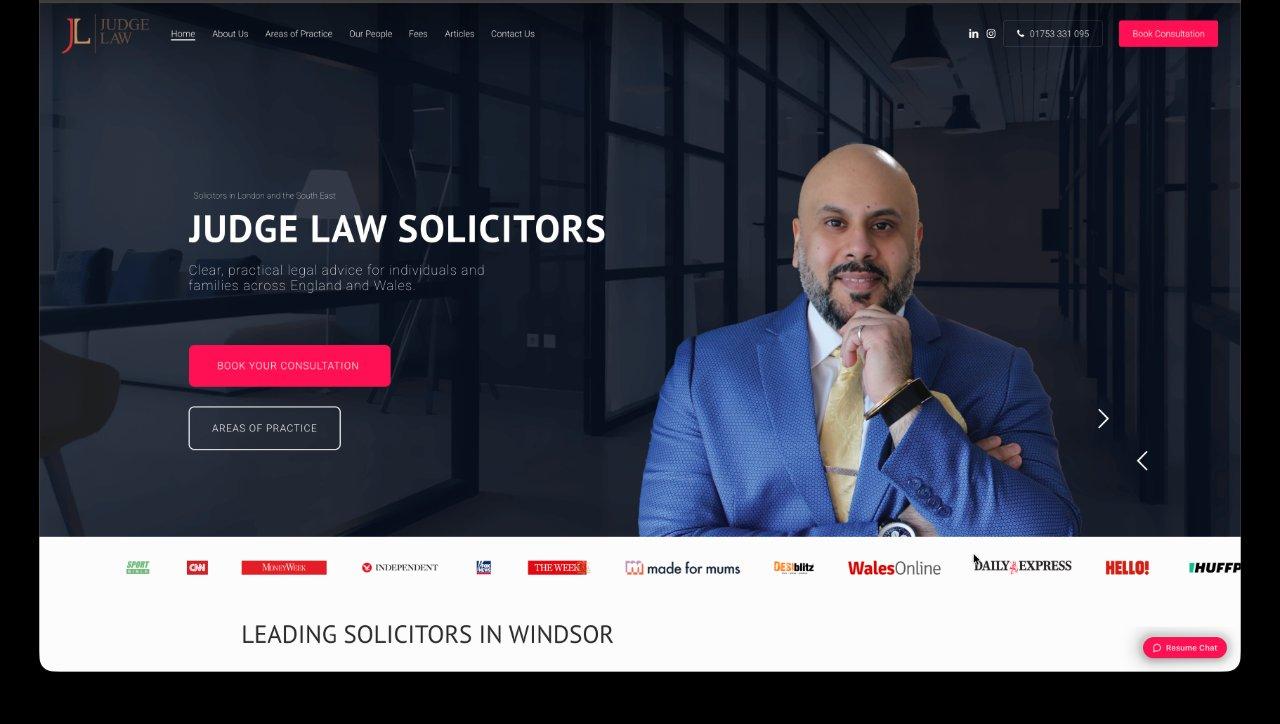
Three years in, the studio has shipped work across eight different sectors — legal, hospitality, fintech, beauty, events, professional services, digital products, and our own. People ask why we work across so many categories. Here’s the honest answer.
The short version: the methodology is industry-agnostic. Brand, Build, Grow — done as one engagement, in that order — works the same way for a law firm in London as it does for a coffee shop in Brentford. The sequence is the value. The category is the dial.
The eight, in brief
Each of these projects went through the same phases. The strategy got tuned to the audience; the system underneath stayed the same.
- →Legal — Judge Law, Waely Law. Solicitors and law firms.
- →Hospitality — Hideout Coffee House. Independent venues.
- →Fintech — Tekton Algo Trading. Technical products for technical audiences.
- →Beauty — AKNails York. Service businesses competing on craft and trust.
- →Events — 36ixty Events. Brand-first categories where visual identity is the product.
- →Professional services — Savita Klear. Credibility-led B2B engagements.
- →Digital products — Kefihub, our own publishing platform.
- →SaaS — Kefilex, the law-firm analytics product born out of the Judge Law engagement.

What stays the same
Across every engagement, four things hold. These are the parts of the system that travel without being touched.
- →The sequence — brand before website, website before ads, every time.
- →The four positioning questions — who is this for, what is it, why does it matter, how is it different.
- →The principle of restraint — a clear position lets the brand say less, more loudly.
- →The connected-system view — we don’t ship parts in isolation, ever.
“The methodology is industry-agnostic. The sequence is the value. The category is the dial.”
What gets tuned
And the things that change per industry — the parts of the system we’ll always adapt.
- →The conversion model — a law firm converts very differently to a coffee shop. The site reflects this.
- →The compliance load — regulated sectors (legal, financial) have specific copy and content requirements.
- →The trust signals — testimonials in some sectors, certifications in others, work-in-progress in others.
- →The growth channel mix — paid search wins in legal; local SEO and Instagram in hospitality; LinkedIn and email in professional services.
- →The aesthetic register — same brand system, calibrated to a sector’s reading audience.

Why not specialise
We get this question a lot. Wouldn’t a sector specialist be better? In most cases, no. Specialists tend to recycle the same answers across all clients. We see the patterns that work across categories — and the bad habits that calcify when an agency only sees one.
Where category expertise really matters — legal compliance, financial regulations — we bring it in via subject-matter advisors. The studio stays generalist on principle. The methodology compounds when applied across categories, not despite it.
The proof
The clearest proof of all this is Kefilex — the SaaS product we built out of the Judge Law engagement. We could only see the operations gap because we’d done the brand, the build, and the growth work end-to-end. A specialist would have missed it. The connected view is the whole point.
See it in context
See the work.
Each of the eight industries above is documented in the work index, with case-study notes on what changed and what stayed the same.
Up next